Not Yet Sayable: Latent Homes
Participatory installation exploring how young adults imagine home under conditions of housing uncertainty. Guided writing, an interactive interface, and an evolving spatial visualisation turn personal memories and imagined futures into material for collective reflection.
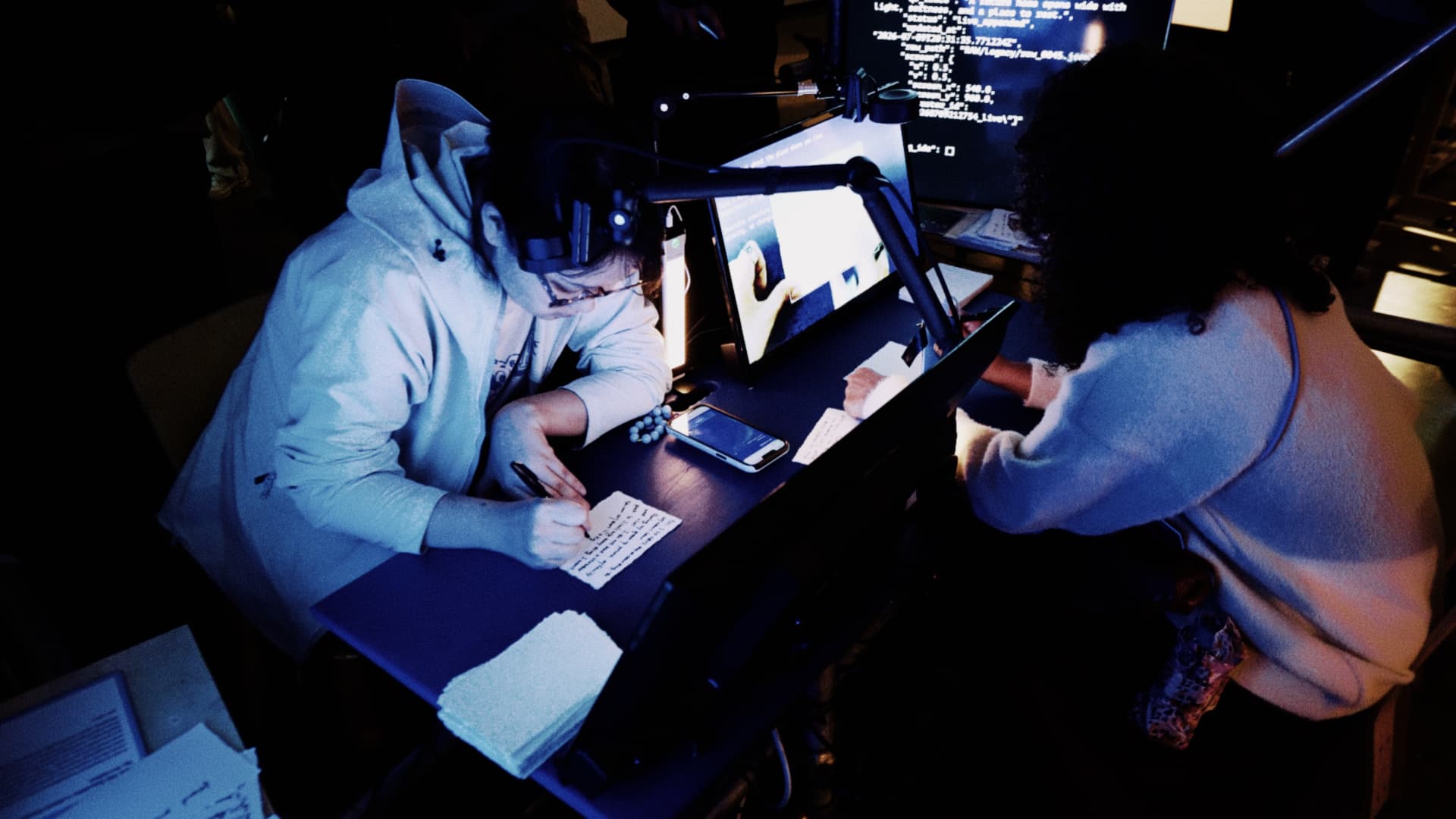
For many young adults, home is no longer a stable reference point. Temporary accommodation, shared living, and repeated relocation shape not only where people live, but also what they feel able to imagine about their futures.
Emerging from experiences of living between Seoul and London, the project considers housing precarity as both a material condition and a constraint on imagination. It approaches imagination not simply as fantasy, but as a social capacity that can be cultivated through shared experience.
How can participatory art create conditions for young adults to collectively imagine home under conditions of housing precarity?
Experiments
The project developed through two terms of prototyping and two participatory workshops, exploring how personal reflection could become a collective experience.
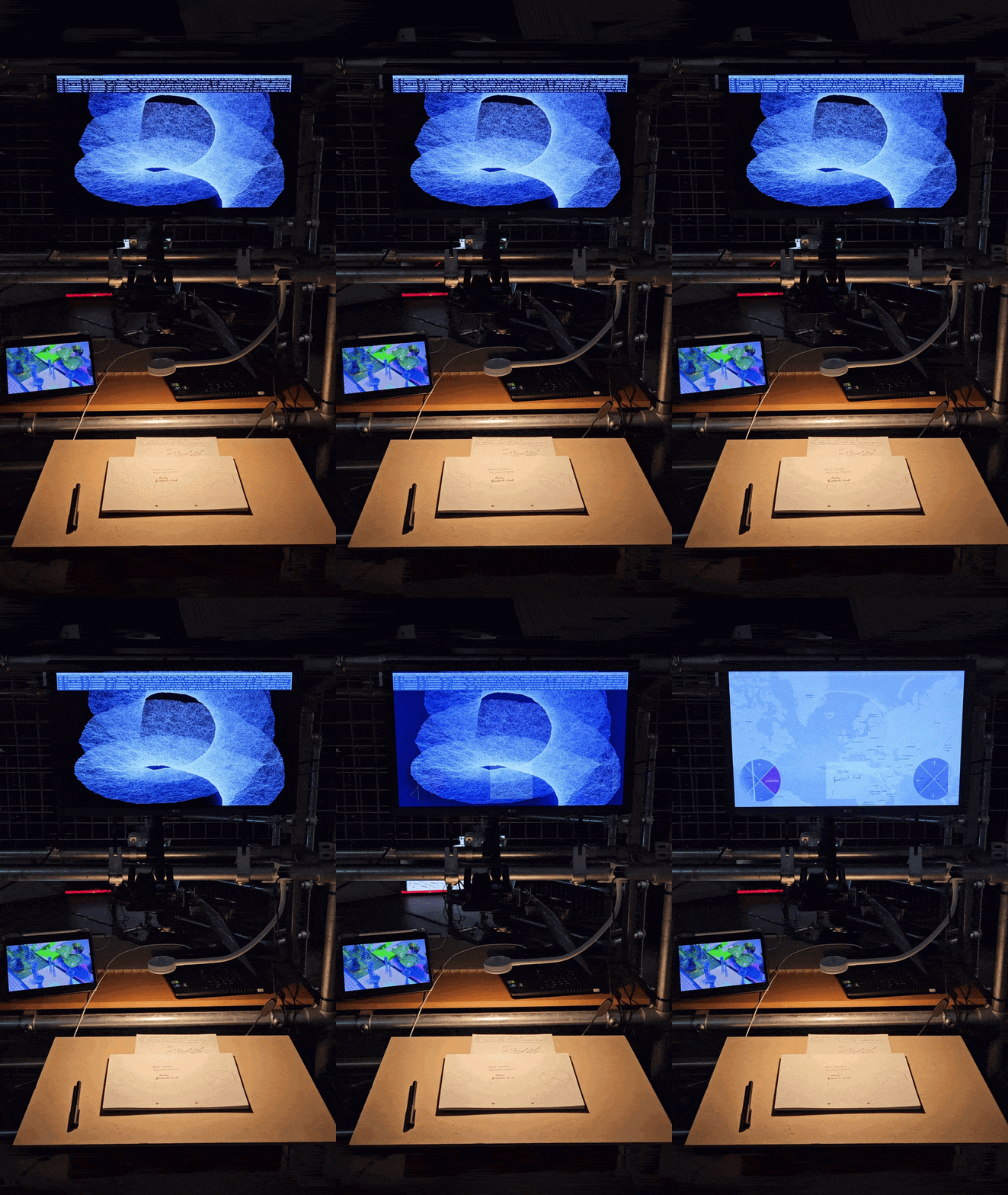
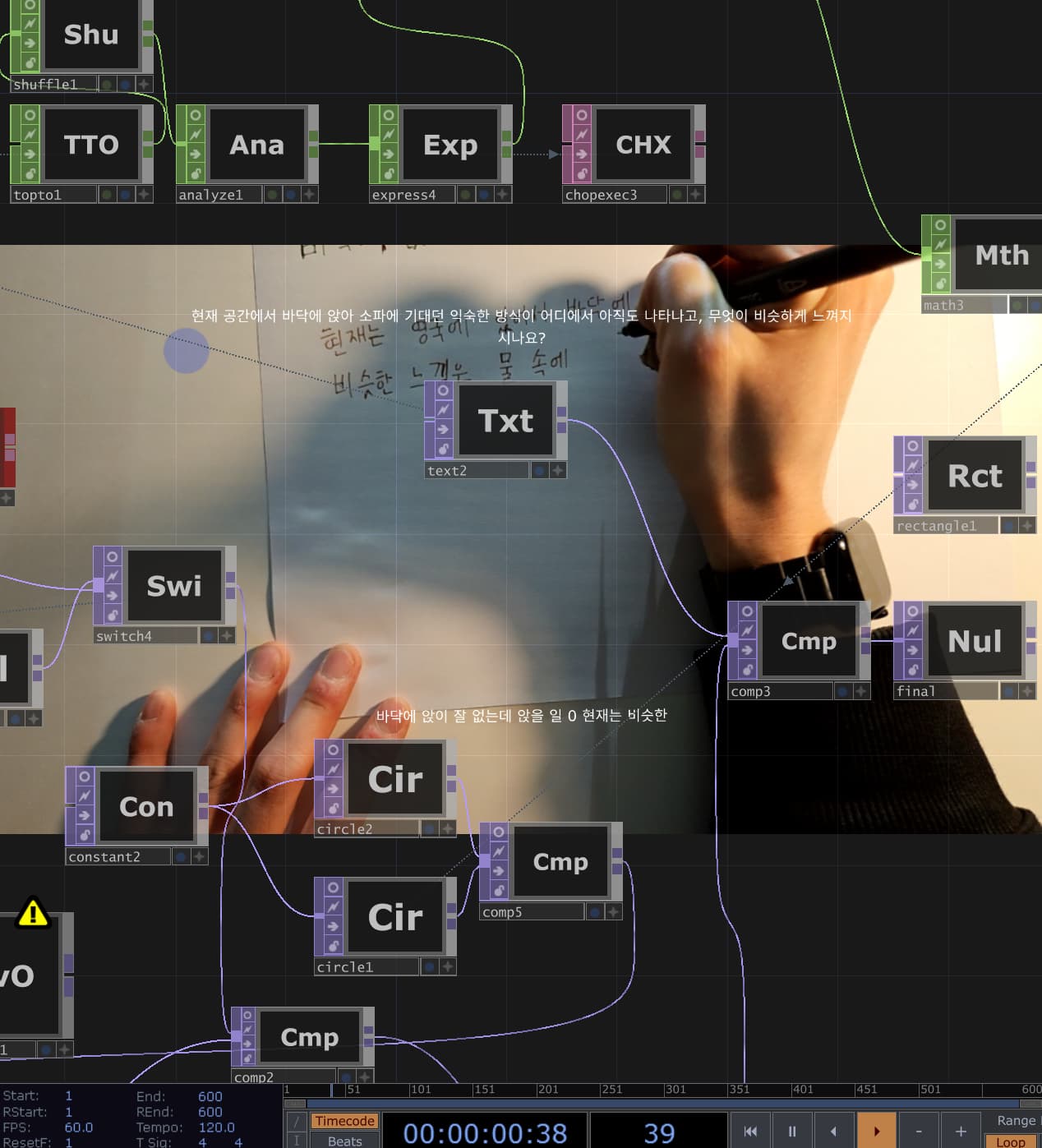
Early experiments connected handwritten responses, camera-based capture, interactive interfaces, and spatial visualisation. Rather than treating these as separate components, the design process explored how they could form a continuous experience of participation.
Particular attention was given to the sequence of questions, the physical arrangement of the writing station, and the opportunity to encounter other participants' responses. These experiments helped shift the focus from simply collecting contributions to creating conditions for reflection, expression, and dialogue.
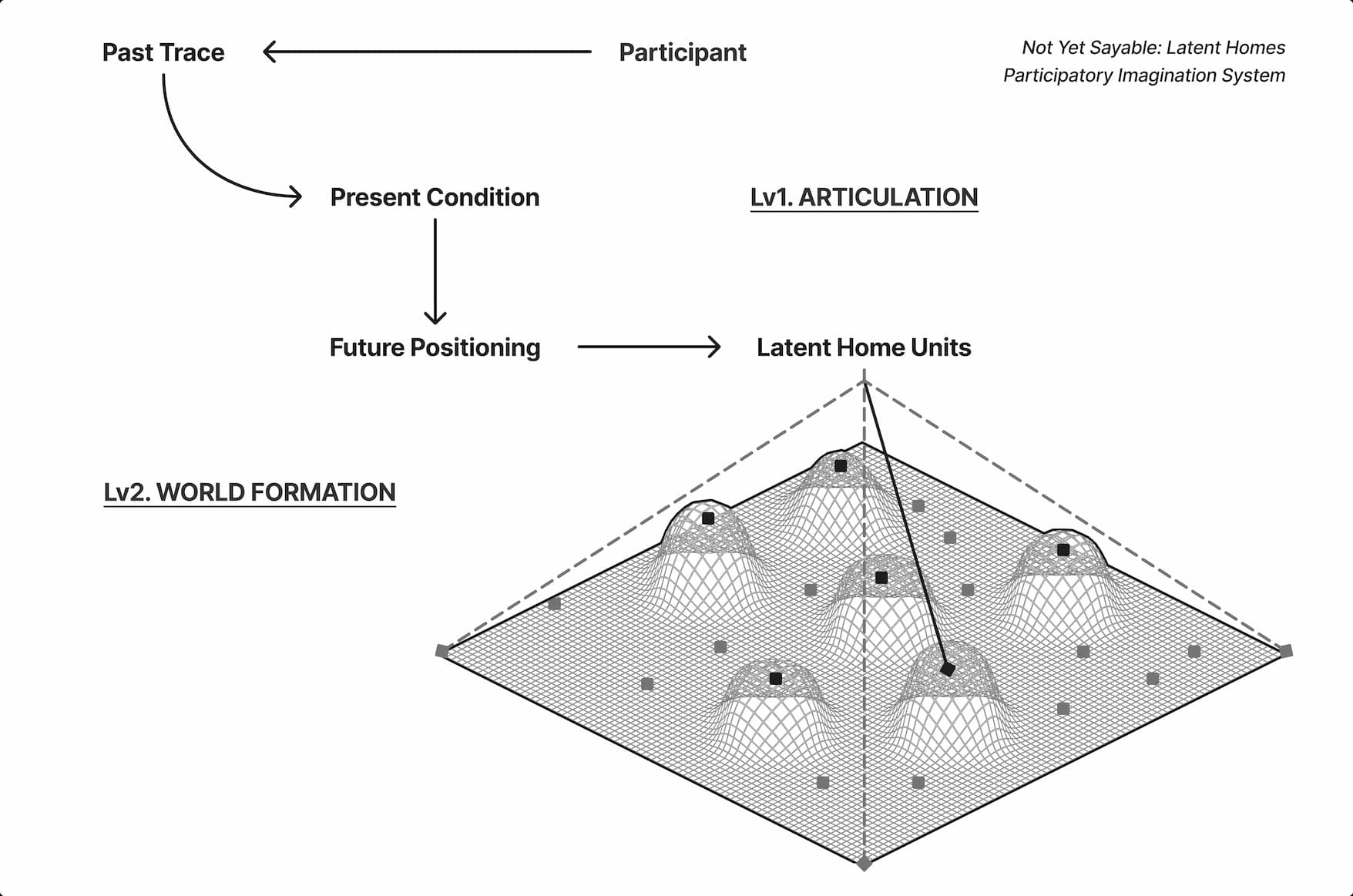
Level Design
The installation is organised into two connected levels: Articulation and World Formation.
Articulation creates space for individual reflection, inviting participants to express memories, present circumstances, and imagined futures. World Formation gives these contributions a shared spatial form, allowing them to accumulate and develop relationships with the experiences of others.
Together, the two levels connect a personal act of imagining with a collective environment. The interaction is designed as an evolving process, moving from individual expression to shared interpretation and collective imagination.
Level 1: Articulation
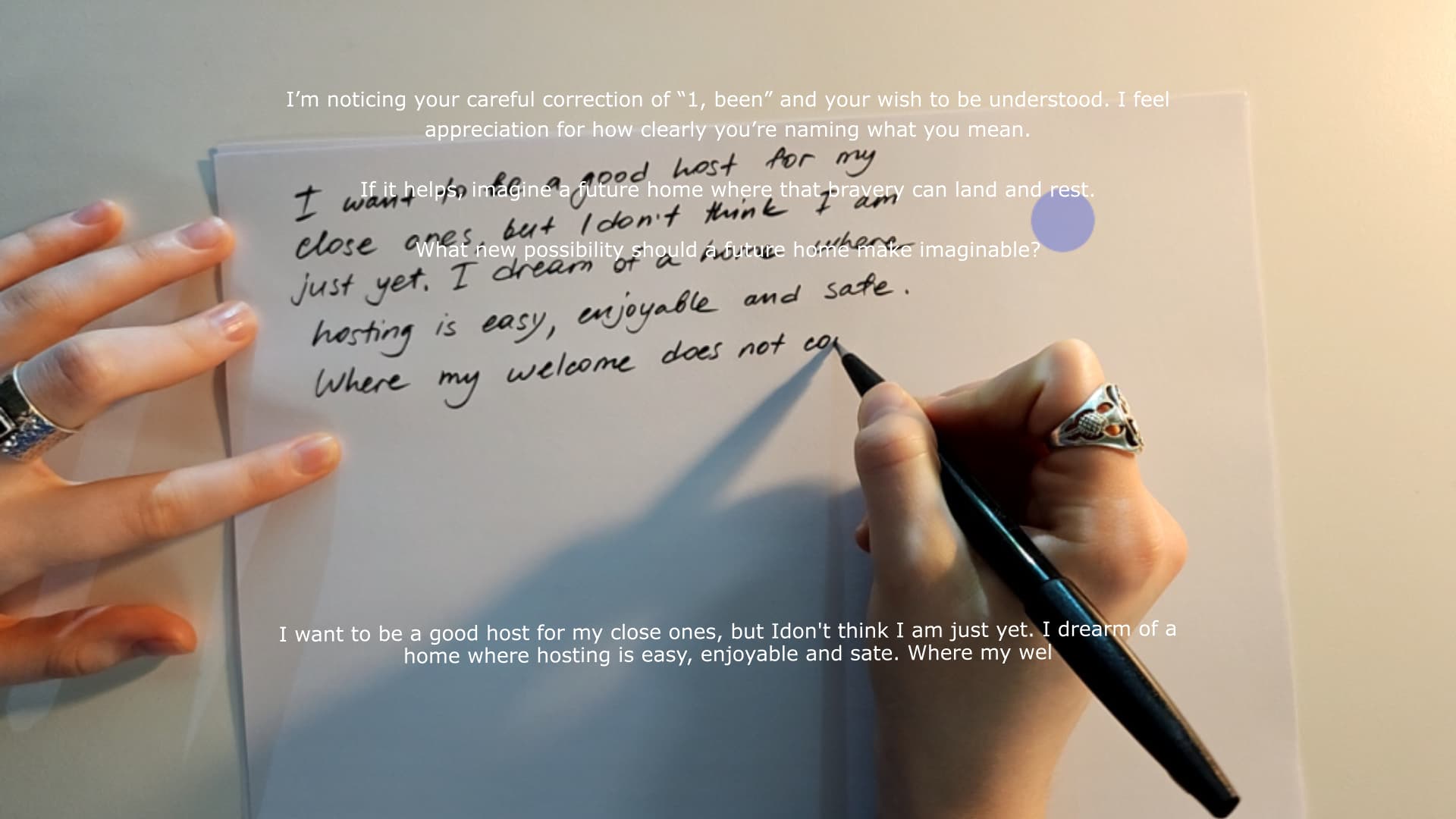
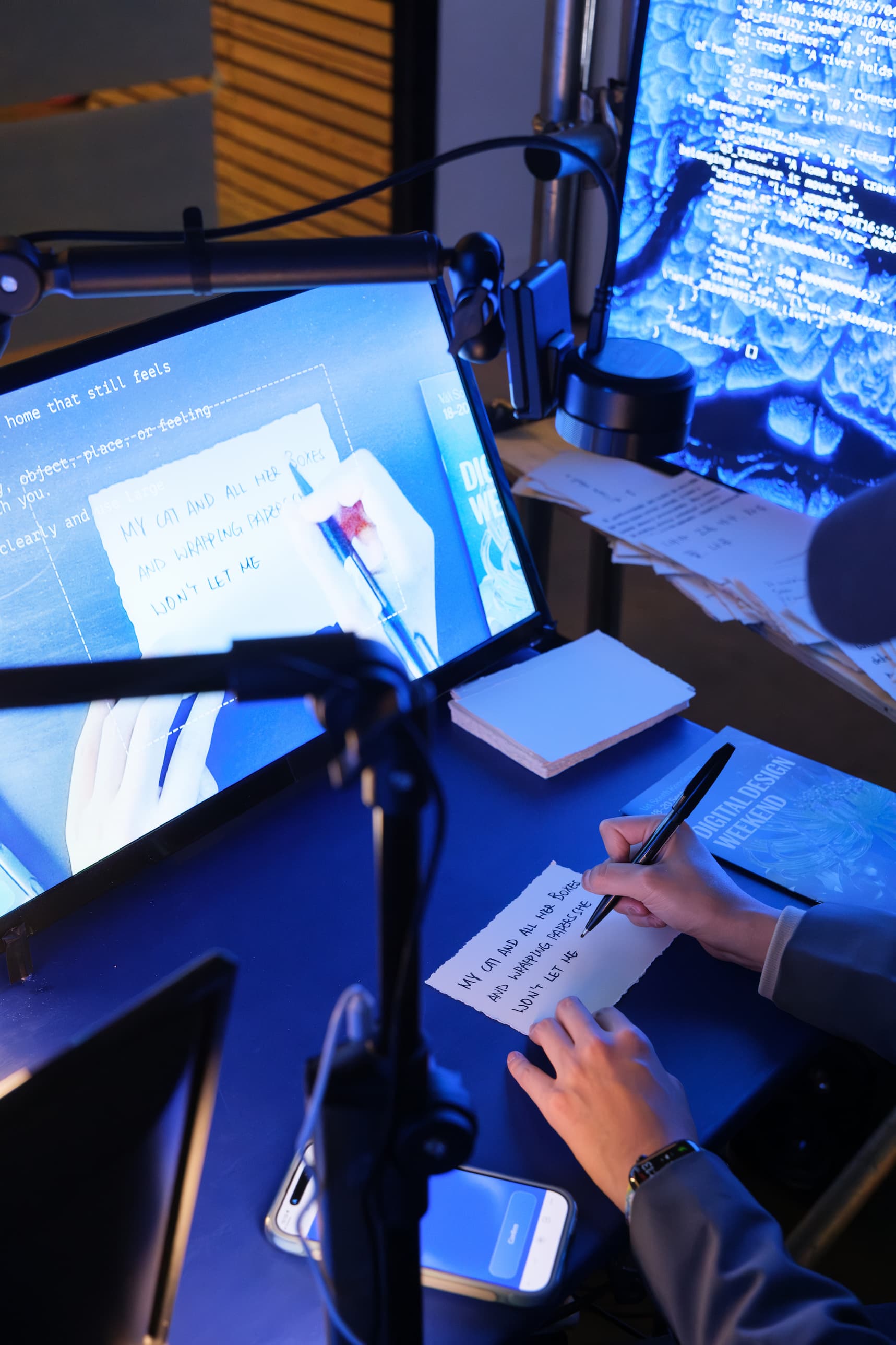
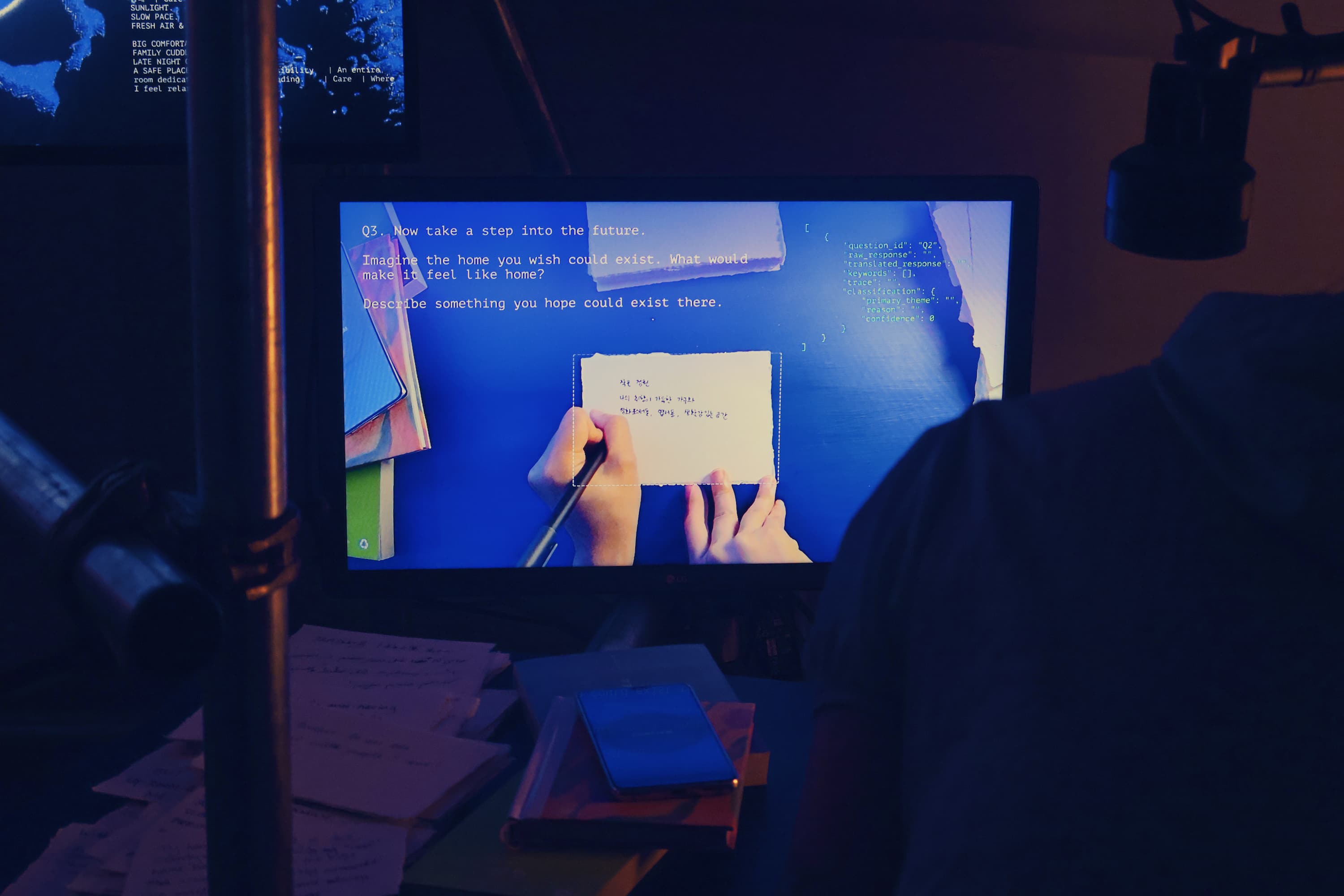
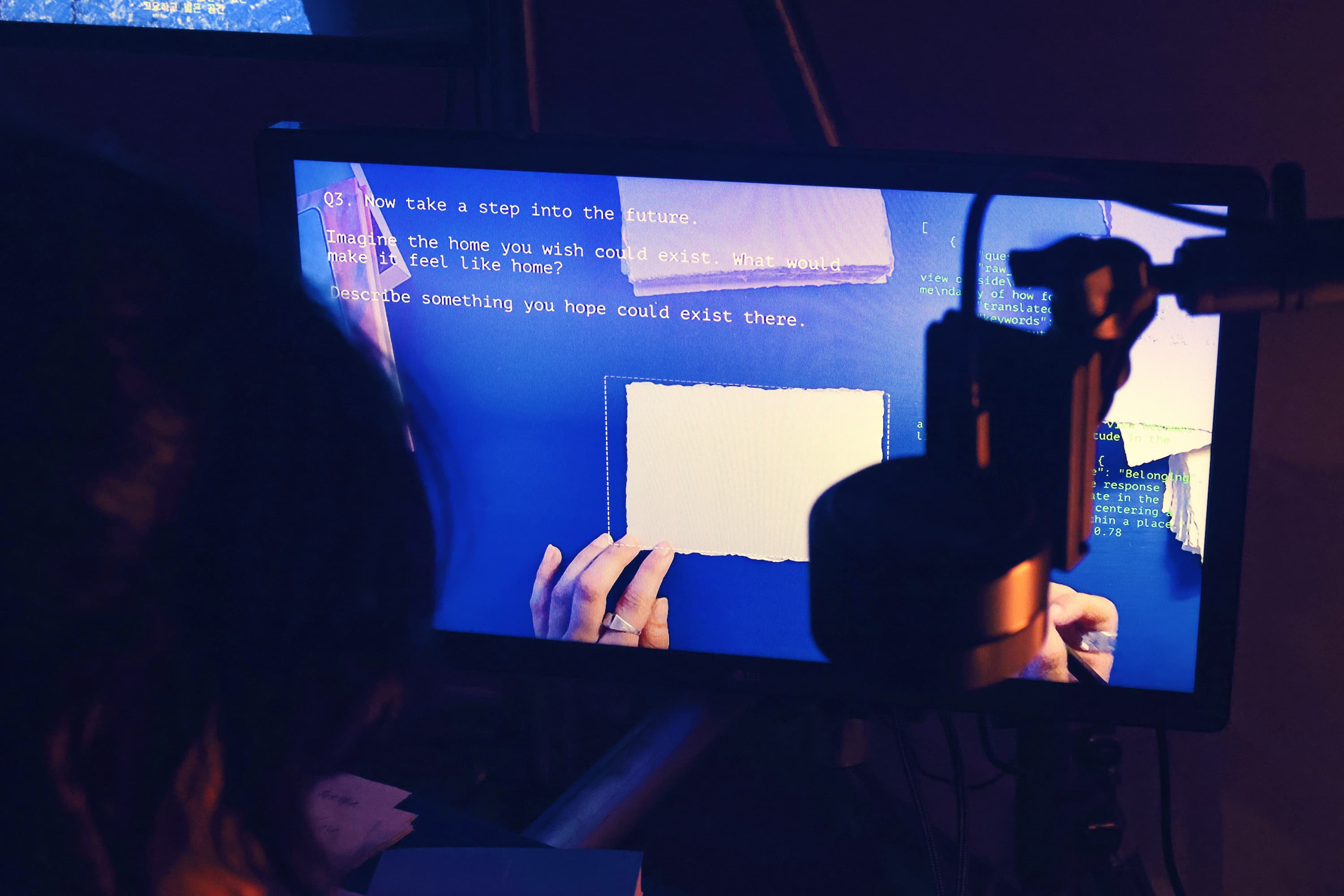
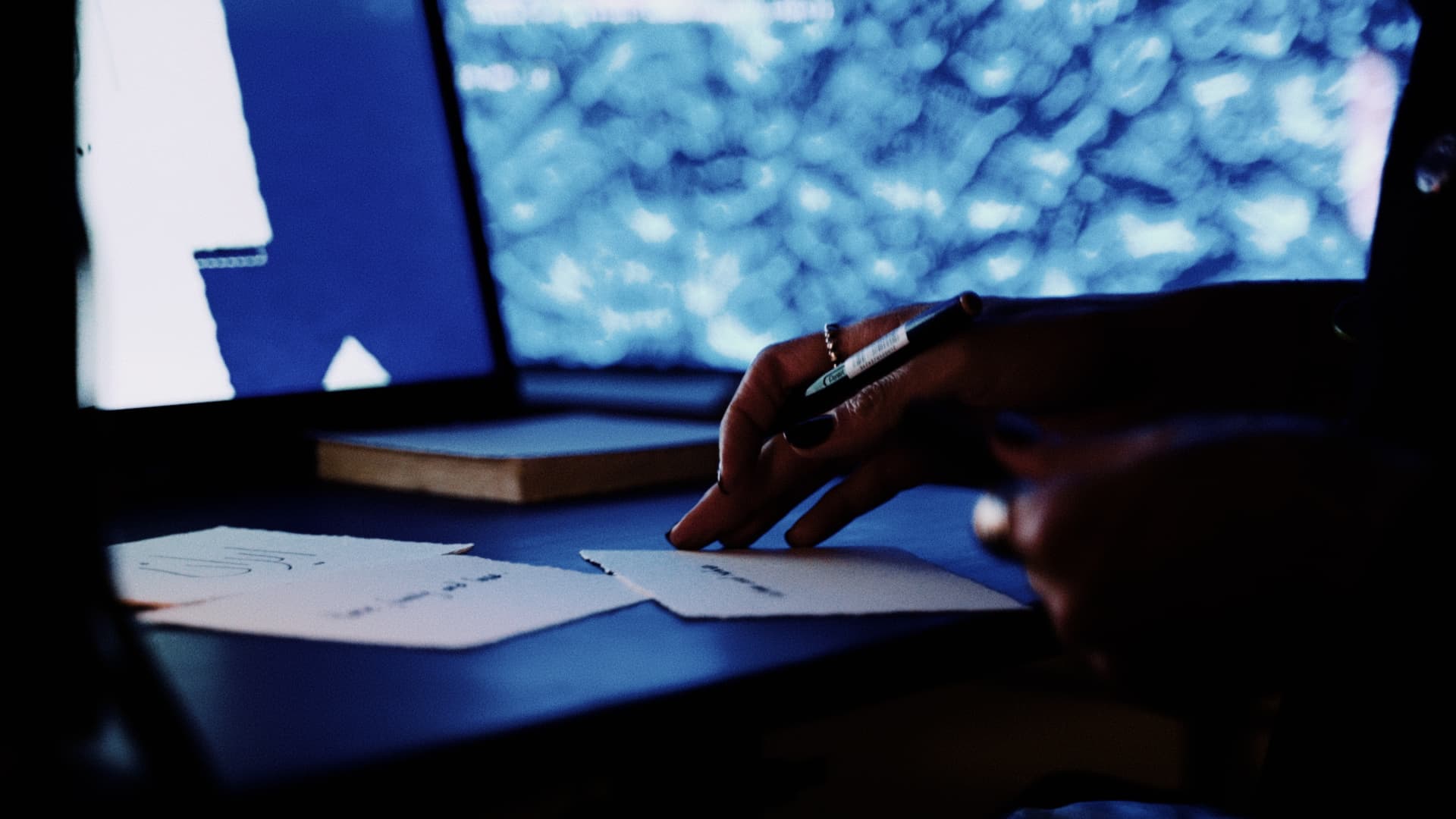
Participants write by hand in response to system-provided prompts about home, drawing on memories, present circumstances and things they wish could exist. Home provides a familiar starting point for reflection and imagination.
The writing station and prompts make room for contributions that may not yet be easy to put into words. Writing gives participants time to stay with a thought and give it a form that can be shared. The purpose is to open an opportunity for imagination through everyday experience.
Real-time feedback and archive
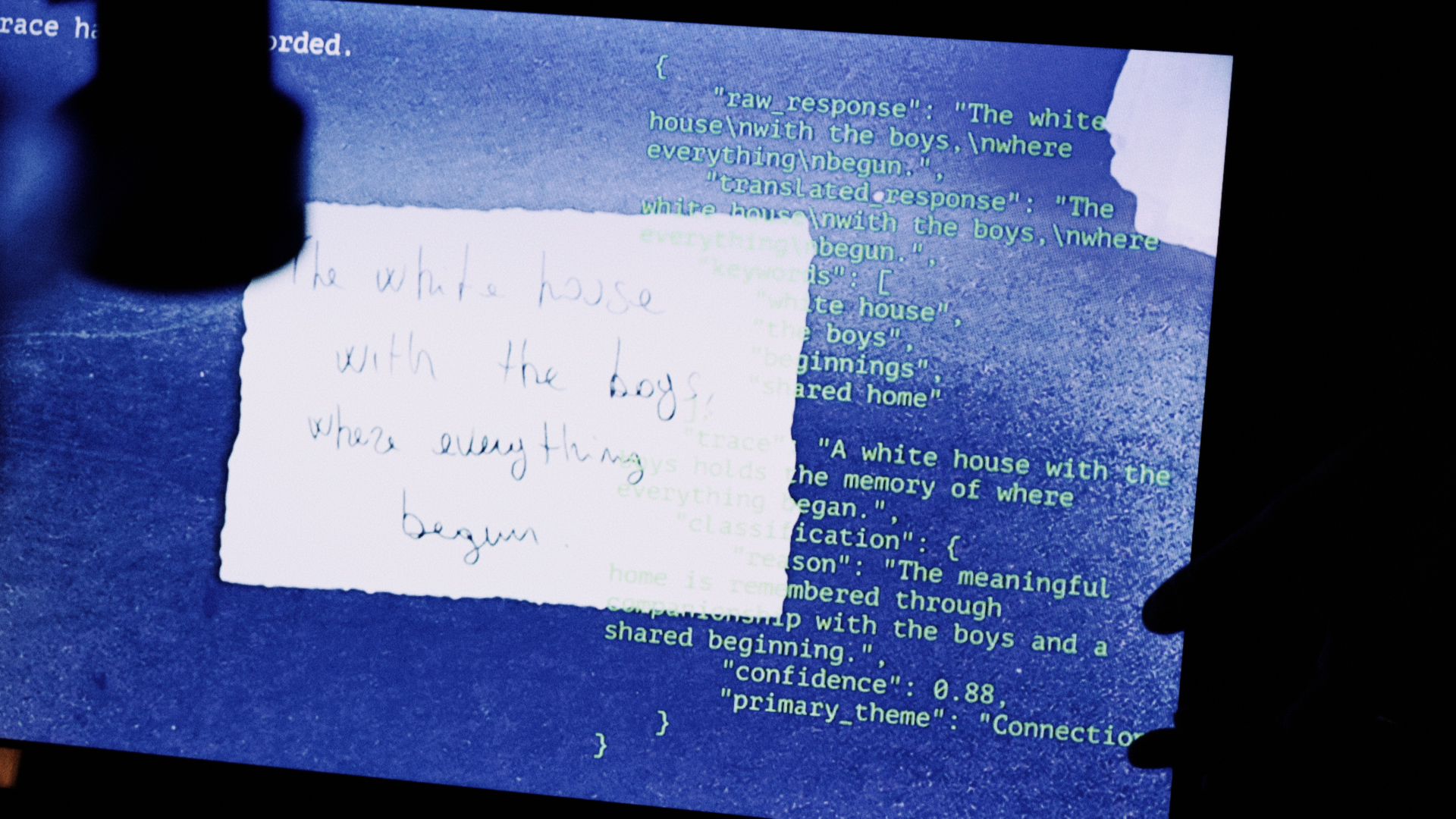
The system gives participants prompts and captures their handwritten responses through a camera. As they contribute, handwriting is recognised and analysed in real time, with feedback appearing alongside the written material.
Feedback and archiving happen within the same live process. The response is recorded and organised while the participant is still engaging with the installation, connecting a personal act of writing to the growing shared material of World Formation.
Level 2: World Formation
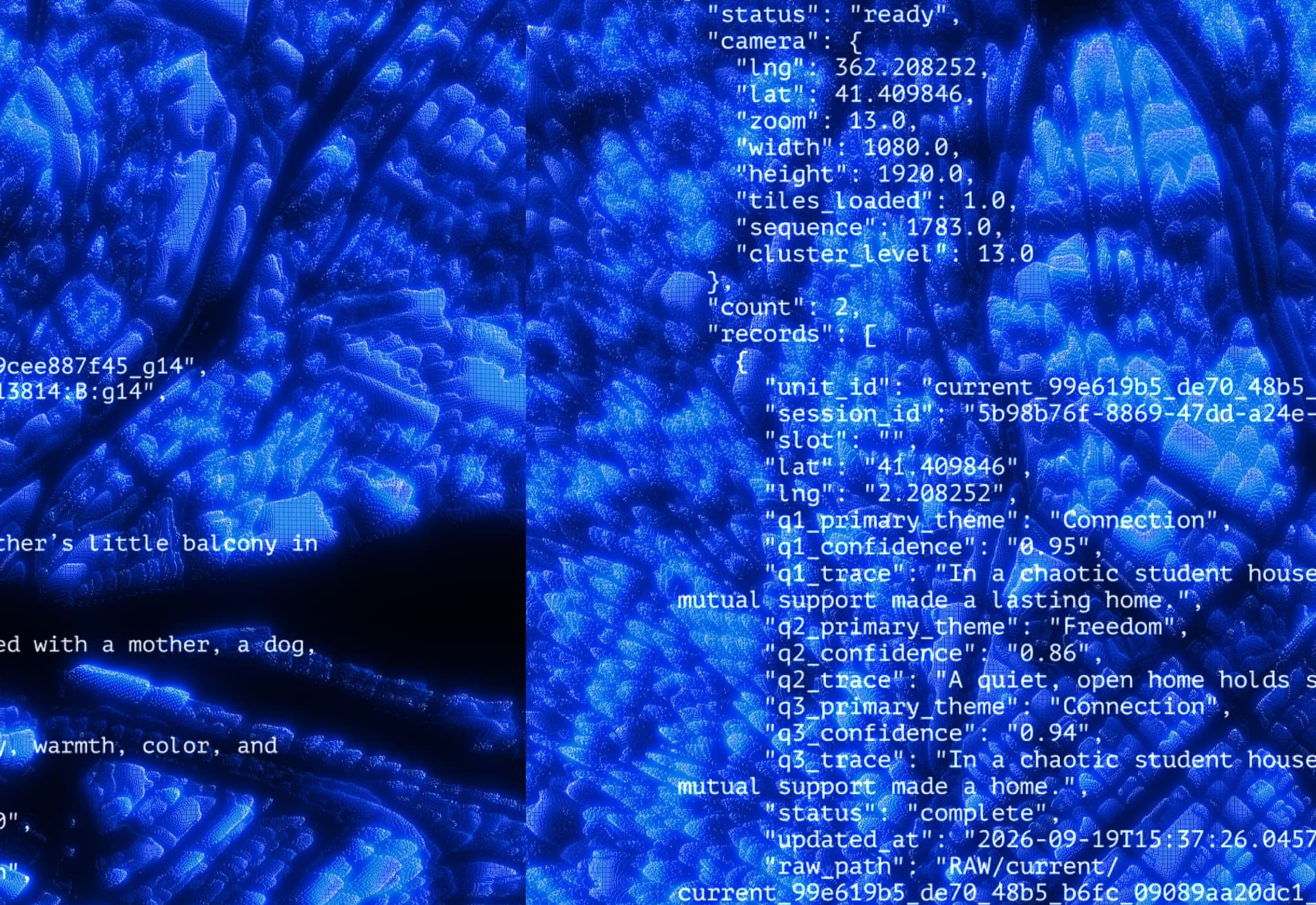
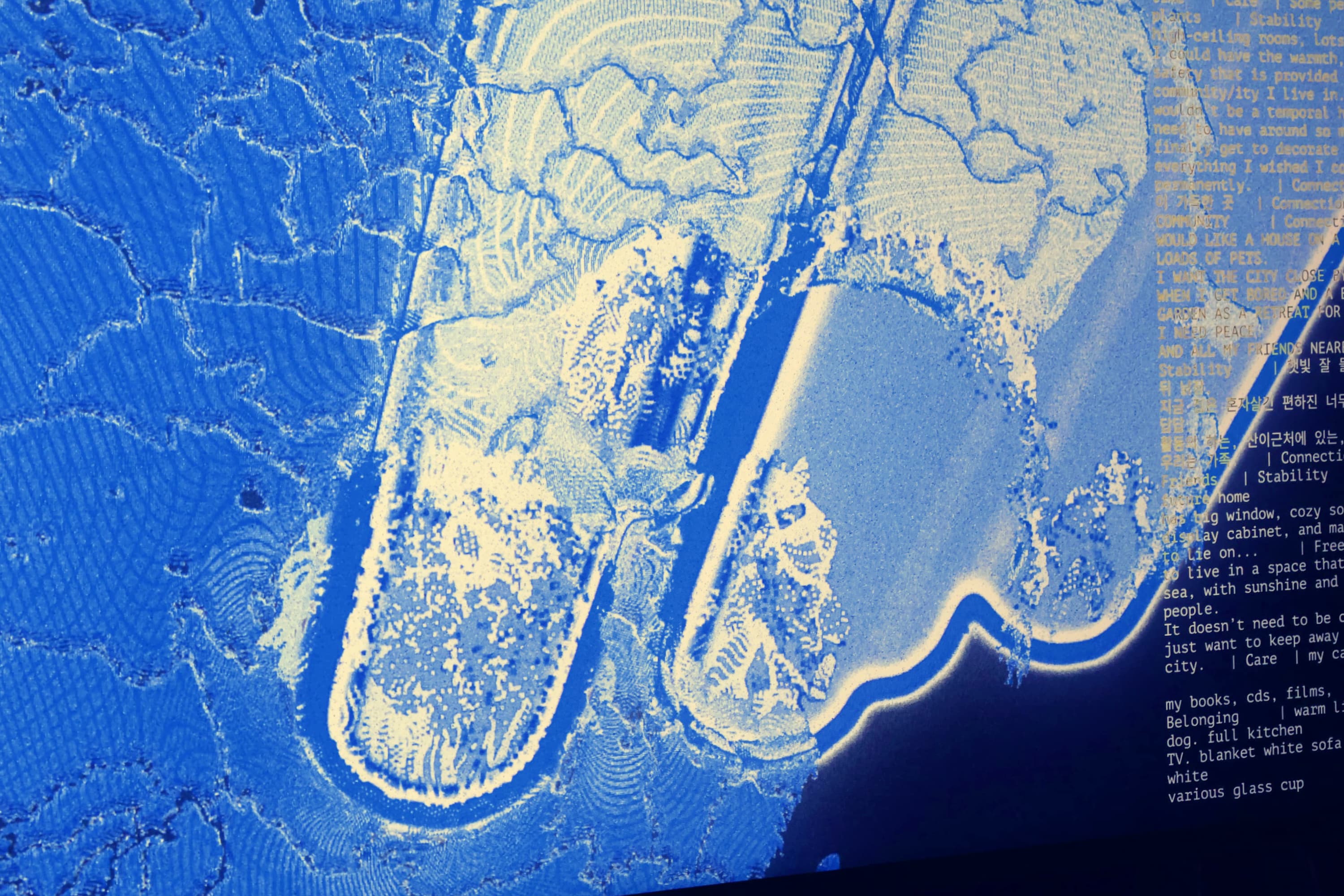
Written contributions are interpreted and organised with support from AI, then accumulated in a shared spatial visualisation. Participants' expressions become data that can be encountered together.
The growing world makes words, memories and relationships visible. As new contributions are added, the visualisation gives people a way to read experiences beyond their own and return to their own responses in relation to others. This is how the material gathered through participation is offered back to the community.
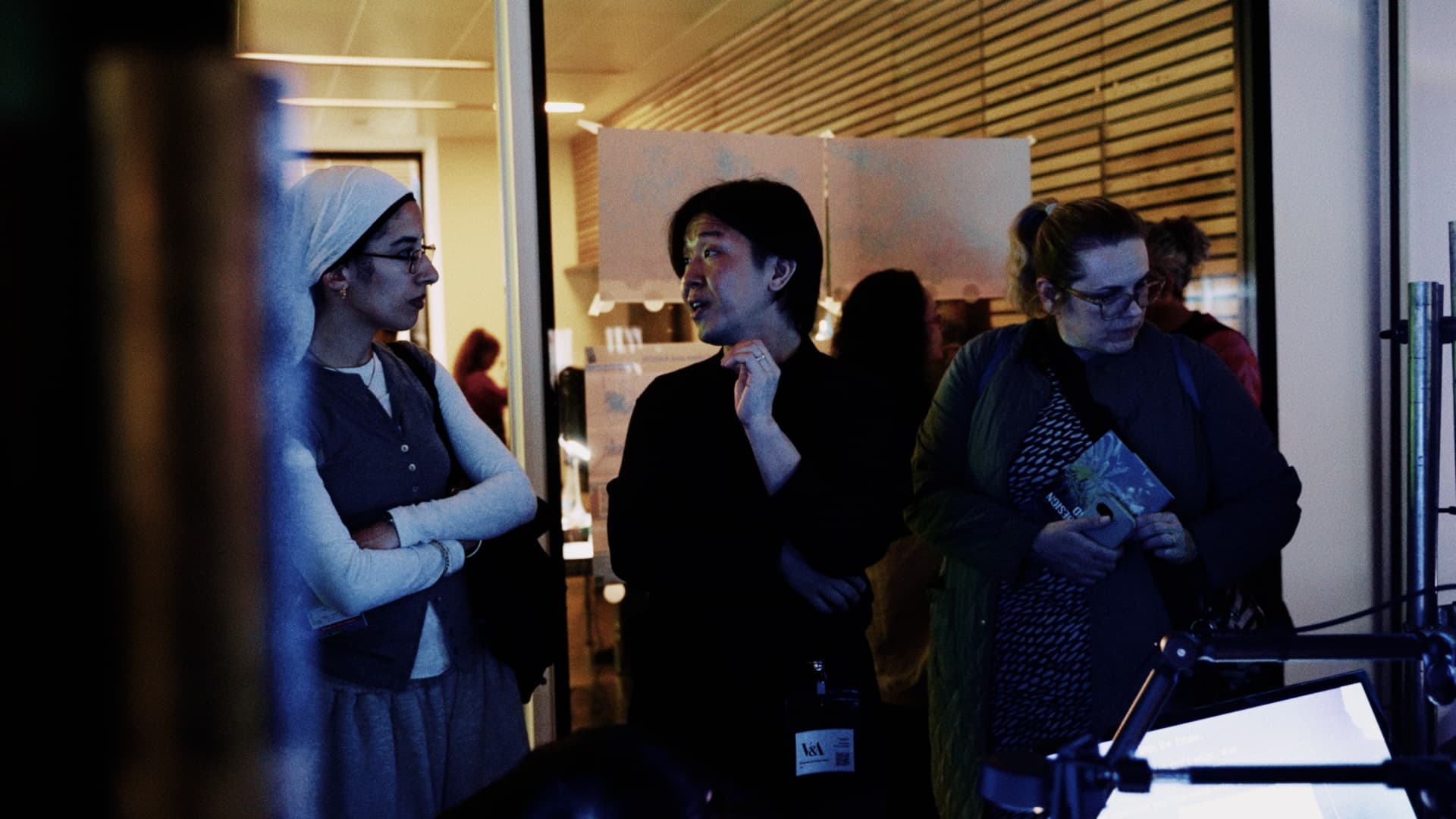
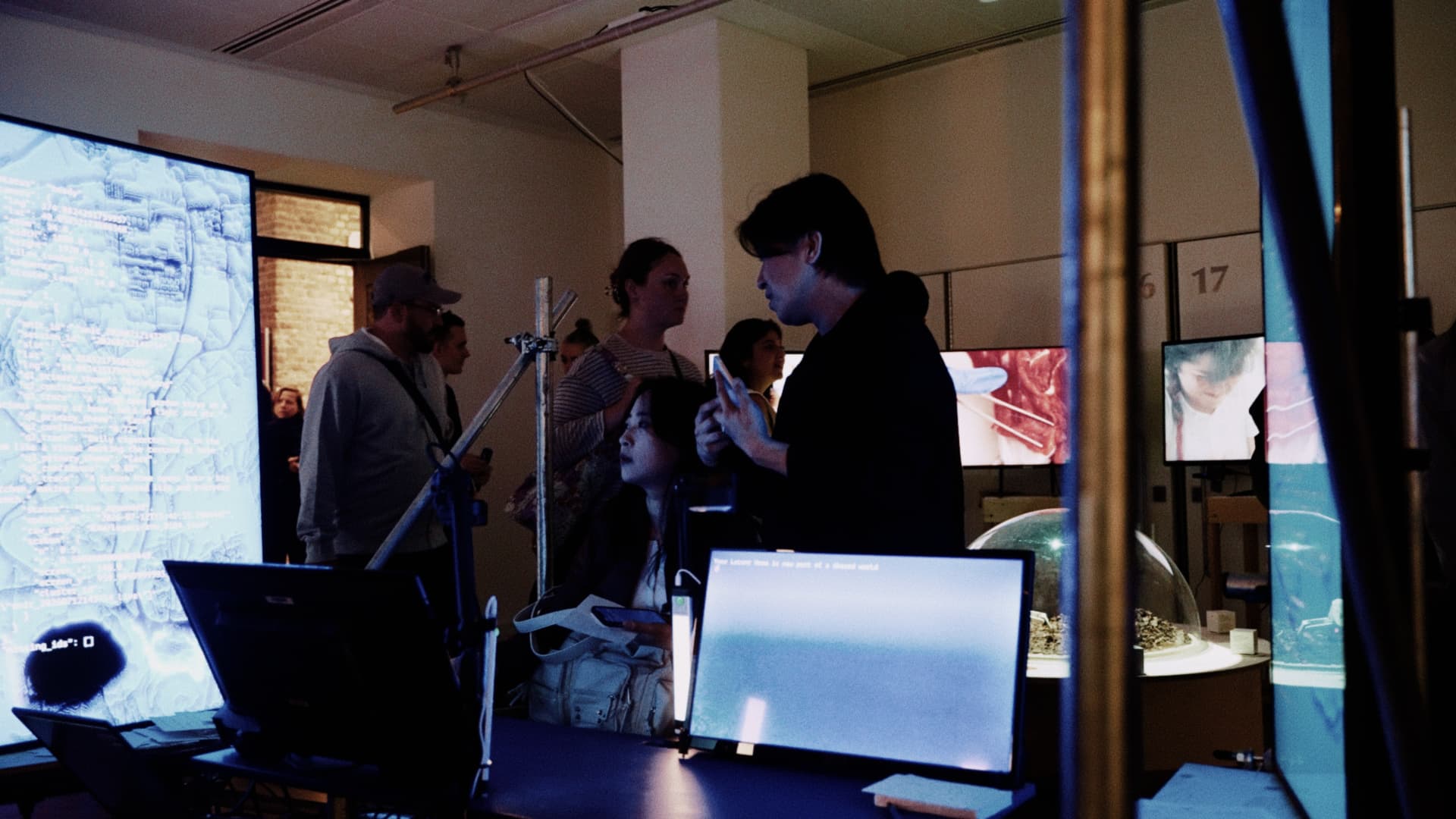
The work does not propose a single vision of home. It creates conditions in which memories, uncertainties, and imagined possibilities can encounter one another, allowing imagination to become a shared and ongoing process.
Thanks to
IED Tutors
- David Meckin
- Nestor Pestana
V&A Digital Design Weekend Team
- Marc Barto
- Nick Murray
- Devanshi Rungta
IED tutors & peers · Exhibition support
- Gian Luca Amadei
- Ronnie Deelen
- Yongwoo Lee